What is Supported Independent Living (SIL)?
Supported Independent Living (SIL) is NDIS funding that pays for support workers to help or supervise a participant with daily tasks in their home, so they can live as independently as possible while building their skills. SIL is not housing, and it does not pay for rent or groceries. It funds the people who provide the support. For young people, a good SIL arrangement is not only about getting tasks done. It is about teaching skills such as cooking, budgeting, personal care routines, and travelling safely, so they can do more for themselves over time.
This guide explains how SIL works, how it differs from other NDIS home and living supports, and how skilled support workers help young people grow in confidence. It is written for families, participants, support coordinators and organisations looking for an NDIS support staff provider.
What does SIL mean under the NDIS?
Under the NDIS, SIL sits within Core Supports, in the Assistance with Daily Life category. It is designed for people with higher support needs who need some level of help at home on an ongoing basis. The NDIS describes it as funding for support workers who help or supervise a person across the day and night, so the person can live as independently as possible.
SIL support can include help with:
- Personal care, such as showering, dressing and grooming
- Preparing meals and learning to cook
- Household tasks, such as laundry, cleaning and shopping
- Taking medication in line with the person’s plan and training requirements
- Building social skills and getting to appointments
- Planning routines and managing time
The exact mix depends on each participant’s goals and NDIS plan.
SIL vs SDA: what is the difference?
These two terms are often confused, but they do different jobs.
- SIL (Supported Independent Living) funds the support workers who help a person in their home.
- SDA (Specialist Disability Accommodation) is funding for the housing itself, for a small number of participants with very high support needs or extreme functional impairment.
Some participants have both. Many have SIL only and live in a rented or shared home. In short, SIL is the support and SDA is the building.
Who is SIL for?
SIL is aimed at people who need regular help or supervision at home. Many participants live in a shared home with other NDIS participants, and some live on their own. For many young people, the question of SIL comes up as they approach adulthood and start planning where and how they want to live.
SIL is not the right fit for everyone. Depending on a person’s goals, other NDIS supports, such as individualised living options or support for daily living during set hours, might suit them better. A support coordinator can help a family explore which option makes sense.
Why daily living skills matter for young people
For a young person with disability, daily living skills are the foundation of independence. A teenager or young adult who can cook a simple meal, keep a budget, catch public transport and look after their own routines has more choice about where they live, who they spend time with and what they do next.
The NDIS intends SIL to help people build skills, not just receive care. That is where the quality of the support worker makes the biggest difference.
How support workers help young people build daily living skills
A skilled support worker does not simply do tasks for a young person. They work alongside them, step by step, and gradually step back as confidence grows. Here is what that looks like in practice.
Cooking and meal planning
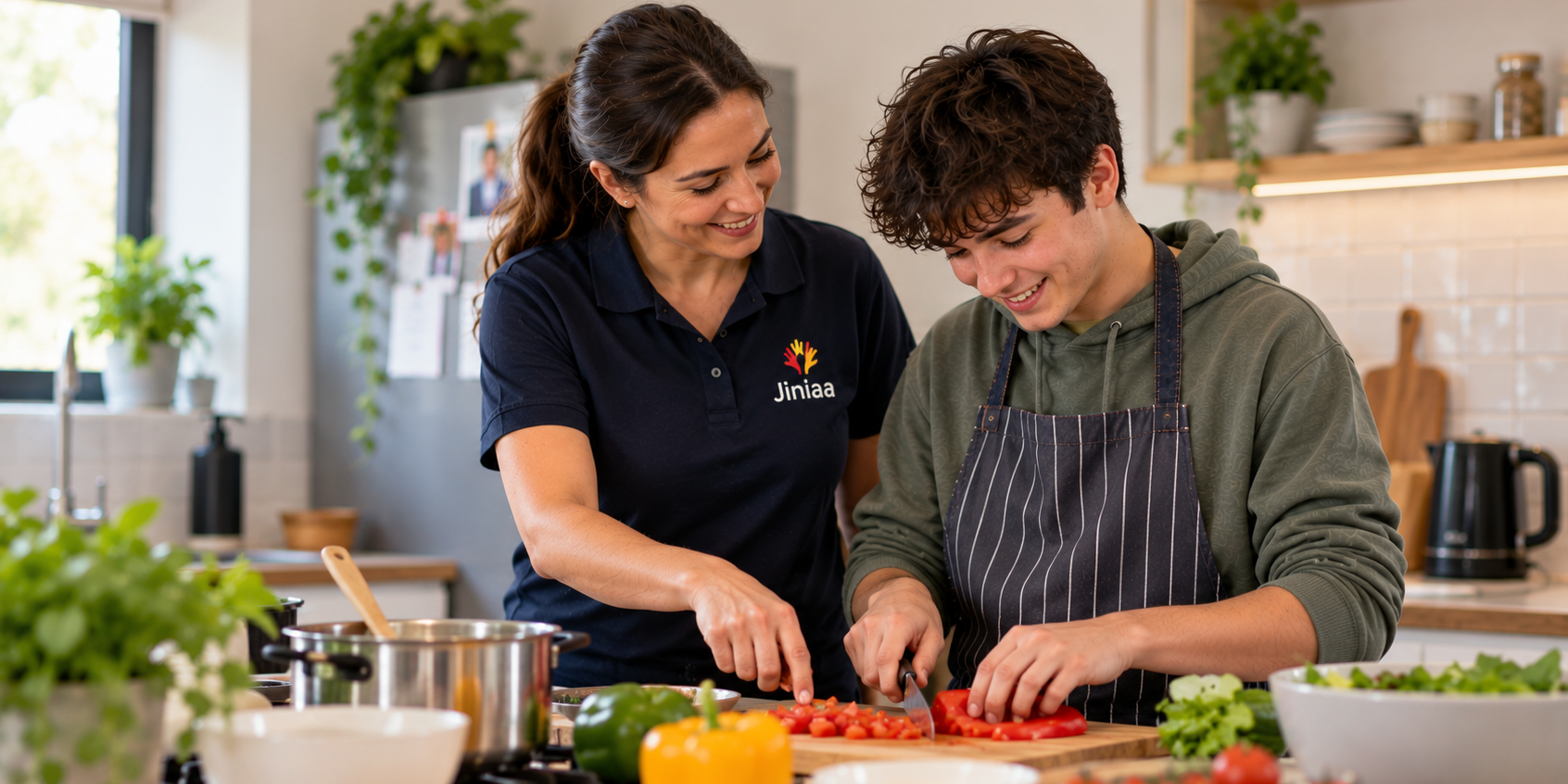
Instead of preparing dinner alone, a support worker might invite the young person to pick a recipe, write the shopping list, chop vegetables, and clean up afterwards. Over time, the young person takes on more of each step.
Personal care and routines
Support workers help young people build consistent morning and evening routines, using prompts, checklists or visual schedules when helpful. The aim is for the young person to take the lead, with support in the background.
Money and budgeting
Practical money skills, such as understanding prices, using a debit card safely and setting a weekly budget, are some of the most valuable skills for independence. Support workers can practise these on real shopping trips.
Travel and community access
Learning to read a timetable, plan a trip and travel safely builds confidence and opens up education, work and social opportunities.
Household management
Laundry, cleaning, keeping a living space tidy and communicating with housemates are everyday skills that make shared living more comfortable for everyone.
Social and emotional skills
Support workers also help young people practise communicating their needs, setting boundaries, managing frustration and building friendships. For young people who have experienced instability, this consistent, respectful relationship can be as important as any practical skill.
What good SIL support looks like
When support is working well, you will usually see:
- Person-centred planning. The young person’s goals, preferences and voice guide how support is delivered.
- A strengths-based approach. Workers focus on what the young person can do and build from there.
- Consistency. Familiar workers who understand the person’s routines, communication style and triggers build trust faster.
- Skill-building over doing-for. Support is gradually reduced where the young person is ready.
- Clear, respectful documentation. Progress notes show real progress toward goals.
- Safe, ethical practice. Workers understand boundaries, incident reporting and the NDIS Code of Conduct.
The role of a disability support worker agency
Organisations that deliver SIL need reliable, well-screened workers who can step into shifts and support young people safely. This is where a NDIS support worker agency can help.
JINIAA is a specialised provider of casual staffing solutions for the youth sector across New South Wales. We supply skilled Residential Care Workers, Supported Independent Living support workers and Disability Support Workers to organisations that need dependable people on their rosters. As a youth support services provider, we focus on matching workers who understand the needs of young people, communicate respectfully and follow the support plan.
Our workers are supported with regular training and mentoring, so they can deliver consistent, professional care. Learn more about our services for organisations or our NDIS worker recruitment services.
What to look for in an NDIS support worker provider
Whether you are a family, a support coordinator or an organisation, these questions can help you choose well:
- Is the provider registered with the NDIS Commission where registration is required? The NDIS has advised that providers delivering SIL must be registered from 1 July 2026.
- How are support workers screened, including NDIS Worker Screening and Working With Children Checks?
- What training and supervision do workers receive?
- How does the provider match workers to participants?
- How does the provider handle incidents, feedback and complaints?
- Can the provider keep workers consistent over time?
A reputable NDIS support worker provider will answer these questions openly.
Frequently asked questions
Does SIL pay for rent or food?
No. SIL funds support workers, not rent, groceries or household bills. Housing costs are separate from SIL.
Is SIL the same as Specialist Disability Accommodation (SDA)?
No. SIL funds the support provided in the home. SDA is funding for the home itself and is available only to a small group of participants.
Can SIL help someone learn to live more independently?
Yes. Building skills is part of the purpose of SIL. Support workers can help with cooking, personal care, budgeting, travel and social skills so a person can do more for themselves over time.
Can a person live alone and still receive SIL?
Some people do, although many SIL arrangements are shared. Whether SIL is right depends on the person’s needs, goals and plan.
Who decides if someone gets SIL funding?
The NDIS decides whether SIL is reasonable and necessary, based on evidence about the person’s support needs and goals. A support coordinator can help gather that evidence.
What is the difference between a support worker and a youth worker?
A support worker helps with daily living and independence under an NDIS plan. A youth worker focuses on the wellbeing and development of young people and often works in residential or community settings. Many roles combine both skill sets.
How can an organisation find reliable casual support workers?
Many organisations work with a specialist staffing provider that screens, trains and supplies casual workers. Contact JINIAA to discuss your staffing needs.
Final thoughts
Supported Independent Living is about more than help at home. At its best, it gives young people the support, structure and encouragement to build real-life skills and take charge of their own futures. The right support worker, working alongside the young person rather than doing everything for them, can turn everyday moments such as cooking dinner or planning a bus trip into steps toward independence.
At JINIAA, we supply skilled, caring support workers who help young people turn everyday moments into steps toward independence. If you are an organisation looking for dependable staff, or a support worker interested in joining a team that values quality care, JINIAA would love to hear from you. Organisations can talk to our team about casual staffing, and support workers can see current opportunities on our Careers page.